
Why your Central TX foundation needs to be watered
Austin Foundations
If you've bought a home in Austin in the last five years, you've probably had at least three conversations where someone whispered "foundation issues" like they were sharing dark family secrets. Let's demystify why Austin is basically the foundation drama capital of Texas.
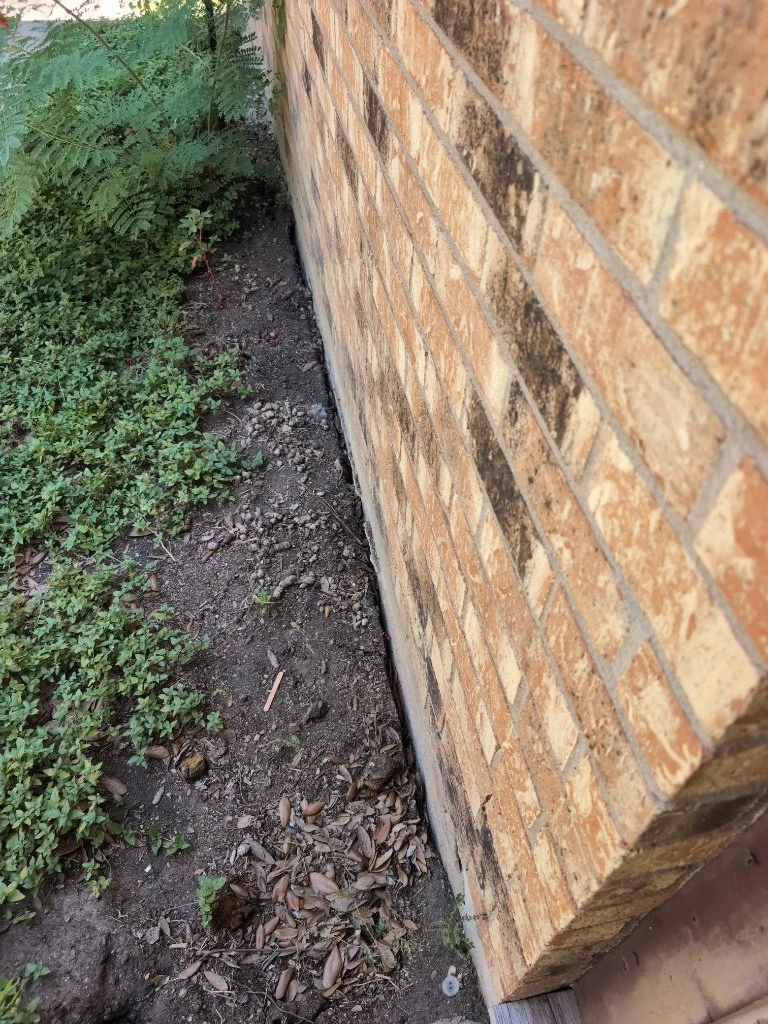
Here’s an example of a foundation pulling away from the surrounding earth
The Geology Problem We Can't Ignore
Austin sits on the "Balcones Fault Zone" and expansive clay soils. When it rains (not often enough), that clay absorbs water like it's been dieting for six months. Then we hit a dry spell and—whoops—the clay shrinks. Your foundation goes along for the ride. Repeat this enough times, and you're going to get cracks in your foundation.
You Have to Water Your Foundation
I know, I know. It sounds insane. But in the dry season, you literally need to keep that soil around your foundation moist and stable. Your foundation needs more water than your garden (at least, assuming your garden is native). What this actually looks like: Run your irrigation around the foundation perimeter during dry spells. Aim for consistent moisture (think like a wrung-out sponge: moist, not waterlogged). Some people swear by soaker hoses around the perimeter. In many cities around Austin, you'll hear that foundation watering is still allowed even when you're not allowed to water your lawn. Yes, this feels ridiculous. Yes, it's actually necessary in Austin. Welcome to the club.
Why Does this Matter
When your foundation shifts, your house moves with it. But unfortunately it doesn't move uniformly. One corner might settle more than another. The slab might dip in the middle. This creates stress on everything built on top of it: your drywall, your door frames, your windows, your flooring, and worst of all, your plumbing. The structure is being pulled in different directions. This shows up in multiple ways within your home. The most common symptom is cracks in drywall, followed by doors that won't close.
Signs Your Foundation Is Actually Settling (Not Just Paranoia)
Not every crack is an emergency. These are listed in increasingly urgent order.
Doors and windows that won't close right. If you suddenly can't shut a door without leaning your shoulder into it, or your windows are sticking when they didn't before, hello foundation settling.
Cracks in the drywall, especially at corners. Small (<1/8") cracks appear in every house sometimes. But if you're seeing new cracks that look like staircase patterns (especially at corners), or if they're growing, that's worth noting. Visible cracks in the concrete slab or foundation itself. Small hairline cracks? Not urgent. Cracks wider than 1/4" that look like they're actively separating? That warrants a professional foundation inspection.
Uneven floors. Walk around your house. Does it feel like you're on a ship?
Foundation movement. Unexplained wet spots in your yard or foundation cracks leaking water. In a slab home, your plumbing runs through or under the concrete. When the foundation settles unevenly, it can crack those lines. You might notice soggy patches in your yard, unusually high water bills, or water seeping up through cracks in the slab itself. Sometimes you'll smell sewage or notice slow drains. This is a big deal because a broken line under your slab is a plumbing issue AND is also weakening the soil underneath and making foundation settling worse. Get a plumber to scope it and confirm, but this needs fixing fast.
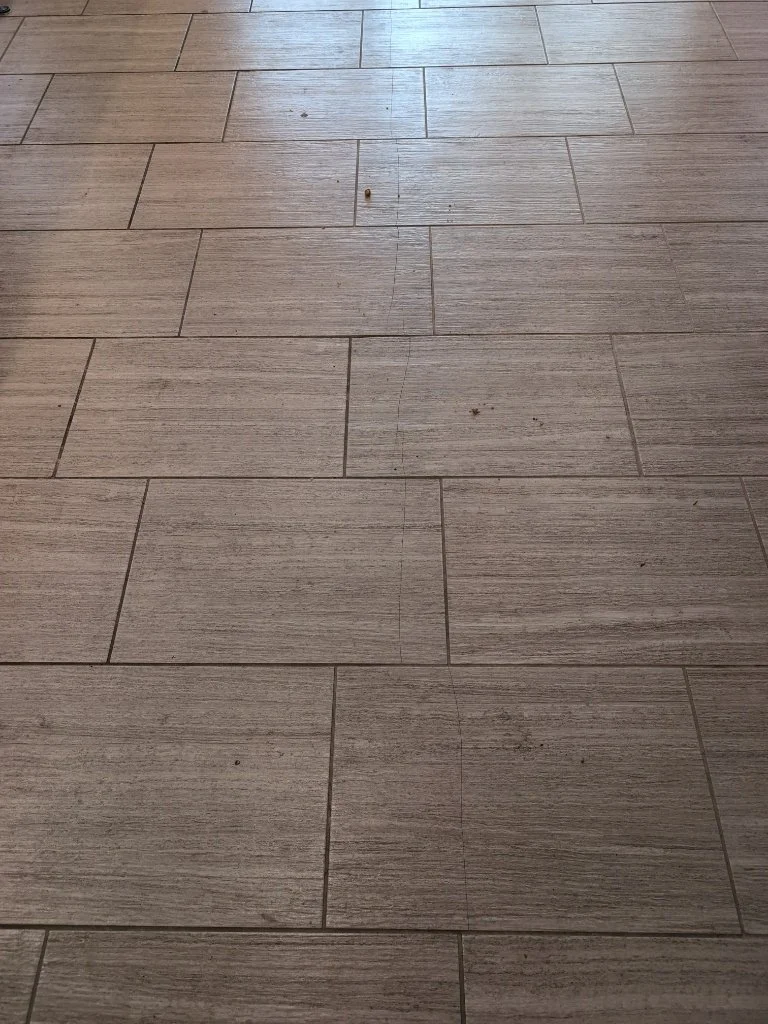
Cracked tile may be a sign of foundation repair needs
What To Do
Get a professional foundation inspection. Seriously. A real engineer, not the guy your realtor knows. They'll tell you if it's actually settling or if it's normal cosmetic stuff. It's pretty cool. They come in and measure the difference in your home's ground level. My own home is very wide (but narrow), about 2,000 linear feet from one side to the other and they were able to tell me that it had 1/2" of delta in height across that entire length. Minor drywall cracks but nothing to be too worried about. Good thing, since our home had the foundation repaired before we bought it.
If it is settling, you have options. Pier and beam repairs, slab jacking, drainage management or soil stabilization, or a combination of these solutions. Costs vary wildly, but the inspection will clarify what's happening. In the meantime: water your foundation during dry spells, make sure gutters are doing their job (water should flow away from the house), and don't panic about every crack.
Austin foundations are dramatic, they NEED attention.
Thanks Austin
This is probably the most "Austin-specific" homeownership headache you'll deal with. We built houses on anxiety-prone dirt in a climate that can't decide what it wants. Every Austin homeowner is either dealing with it, thinking about it, or having it whispered to them at parties. What foundation issues have you dealt with? Drop your stories below, misery loves company. 🏡